
Ghana
Fair Choices on the Path to UHC – In Times of Change
(Support to Evidence-Informed Priority Setting (StEPS+)
Background
All countries have to decide which public health services to invest in for their populations. Ensuring equitable access to quality health services without financial risk for patients is a core responsibility of the state. In countries with highly constrained budgets, decisions on how to ensure access, equity, financial risk protection and entitlements are even more critical, both for personal welfare and national development. Many LMICs face rapidly shifting demographics and dramatic reductions in donor funding for global and public health, making priority setting in health even more critical. The project will support countries in navigating these transitions to build resilient, equitable health systems. Specifically, the project will encourage and support health policy decisions that are both evidence-based and equitable, meaning they are grounded in principles of fairness. As part of this effort, this project will support economic evaluation, applied ethics, locally constructed value frameworks and inclusive deliberation in the health priority setting process. This will not only lead to more efficient use of budgets by directing resources towards highly cost-effective health interventions but also strengthen capacity in these areas among academics and policymakers in the project countries to ensure sustainability.
Project Goal
The overall goal of the new project is to help low- and middle-income countries handle the large cuts in development aid. The country teams in the project will help improve the legitimacy, effectiveness, efficiency, and fairness of priority setting within their respective countries through evidence-informed, context-specific approaches.
Project outcomes
- Outcome 1: Country capacity strengthened to translate and align evidence-based priorities into actionable health system reforms
- Outcome 2: Evidence-informed priority setting institutionalized within ministries of health and academic institutions
- Outcome 3: FairChoices advanced as a tool for priority setting in health with a focus on innovation for refining and expanding the methods and tools used for priority setting
- Outcome 4: Global, regional, and local priority setting networks are strengthened to build and expand partnerships
Key Partners
- Ministry of Health
- Ghana Health Service
- National Health Insurance Authority
- Ghana Medical Trust Fund
- University of Ghana
StEPS+ Project Objectives
- Mapping and validation of essential health services and interventions to support costing and the development of health benefit packages
- Cost the National Essential Health Services Package, especially PHC-level interventions, to support the new government’s Free PHC policy
- Build the capacity of the MOH, NHIA, GHS, and other relevant state agencies at the PhD and Master’s levels in priority setting and evidence-based decision-making
- Operationalise the National Values Framework (NVF) through structured operational tools Framework to support priority-setting mechanisms in the health sector
- Use the FairChoices model for Health Technology Assessments and ethical frameworks for costing, and for revising health benefit packages to support health decisions in Ghana
- Regularly conduct fiscal space analysis to support the health sector in resource prioritization and evidence-based decision-making
- Institutionalize the FairChoices model for costing and priority-setting across institutions and relevant state agencies, including the Ministry of Health, the National Health Insurance Authority, the Ghana Health Service, and the Ghana Medical Trust Fund
- Secure high-level agreement on new additions to Ghana’s NCD benefits, and align the NCD package with primary health care and the Essential Health Service Package for system-level implementation
- Develop and update evidence-informed treatment guidelines (STG) with levels of care and a Primary Health Care (PHC) focus
The Team
Meet the dedicated local team leading the Ghana health benefit package design initiative.

Prof. Kwesi Torpey
Principal Investigator
View Profile
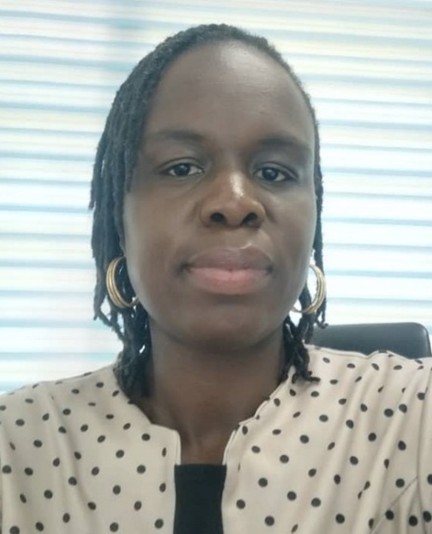
Professor Kwasi Torpey is a Professor of Family Health and Dean of the University of Ghana School of Public Health. He is a Public Health Physician, Program Manager, and Researcher with extensive experience in the implementation of public health programs in Ghana, Nigeria, Kenya, Uganda, Ethiopia, Eritrea, Tanzania, Mozambique, Zambia, Zimbabwe, and several other countries. He is the Scientific Chair of the International Conference on HIV Treatment, Pathogenesis, and Prevention Research in Resource-limited Settings (INTEREST) and an Associate Fellow of the Amsterdam Institute of Global Health and Development, Academic Medical Centre of the University of Amsterdam, Netherlands.
Prior to joining the University of Ghana, he had a distinguished career with Family Health International, a US based international NGO serving in a variety of roles including Deputy Chief of Party, Technical for Nigeria, Director of Technical Services for Zambia, and Regional Senior Technical Advisor for the Africa Region. He also worked as the Senior Clinical Officer in the Family Health International/ START program that introduced HIV treatment in Ghana two decades ago. He is an Honorary Associate Professor of London School of Hygiene and Tropical Medicine in London. Professor Torpey has authored over 150 scientific publications and is a member of several technical working groups at the international level. He is the principal investigator of several research studies on HIV, other infectious and non-communicable diseases.
He received his education at the University of Ghana Medical School and Netherland School of Public Health. He has a PhD from the Institute of Tropical Medicine and the University of Antwerp in Belgium. He is a fellow of the Ghana College of Physicians and West Africa College of Physicians.
Prof. Genevieve Cecilia Naa Okailey Aryeetey
Co-Investigator
View Profile

Professor Genevieve Cecilia Naa Okailey Aryeetey is a Health Economist and Senior Lecturer at the Department of Health Policy, Planning and Management, School of Public Health, University of Ghana, where she serves as Head of Department. She holds a PhD in Medical Sciences from Radboud University Nijmegen Medical Center in the Netherlands. Her research focuses on health policy and systems analysis, political economy of health, health financing, inequality, and health technology assessment. She has led and collaborated on several nationally and internationally funded projects aimed at strengthening evidence-informed priority setting and health systems governance in Ghana and across Africa. Professor Aryeetey has served as Principal Investigator and Co-Investigator on major grants funded by Africa CDC, the Bill & Melinda Gates Foundation, NORAD, the Norwegian Research Council, and other global partners. Her work bridges research and policy to support equitable and efficient health system decision-making toward Universal Health Coverage.
Dr. Leonard Baatiema
Co-Investigator
View Profile

Dr. Leonard Baatiema is a Senior Lecturer in the Department of Health Policy, Planning and Management at the School of Public Health, University of Ghana. Leonard holds a PhD in Public Health from Australian Catholic University, Sydney (Australia), and an MSc in Health, Community, and Development from the London School of Economics and Political Science, London (UK). His research interests are in health systems, primary health care, digital health, human resources for health, priority-setting in health care, evidence-informed policies, health sector reforms, UHC, and non-communicable diseases.
Dr. Richmond Owusu
Co-Investigator
View Profile
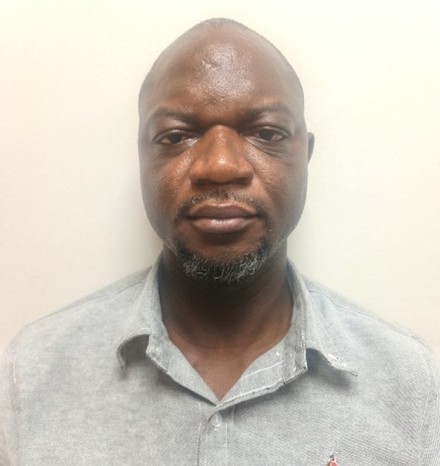
Dr. Richmond Owusu is a Health Economist and Senior Lecturer at the Department of Health Policy, Planning and Management, School of Public Health, University of Ghana. He holds a PhD in Public Health (Health Economics) from the University of Ghana. His research focuses on health financing, cost analysis, and economic evaluation of health interventions, with particular expertise in immunization economics, health technology assessment (HTA), and the economic burden of communicable and non-communicable diseases. He has led and contributed to major national and international projects, including cost-effectiveness analyses of vaccines, COVID-19 vaccination programs, and priority-setting initiatives across Africa. Dr. Owusu serves on the Ministry of Health’s Health Technology Assessment Technical Working Group, Africa CDC’s Expert Working Group on Priority Setting and Resource Optimization, and WHO advisory platforms. His work supports evidence-informed decision-making to advance efficient and sustainable health systems.
Mr. Edmond Nwinbamon Balika
Analytical Team Lead
View Profile

Edmond Nwinbamon Balika is originally an engineer trained at the Kwame Nkrumah University of Science, and Technology (KNUST), Ghana with a strong foundation in systems thinking and analytical problem-solving. Building on this background, he transitioned into software development and later earned a master’s degree in data science from the University of Denver, USA specializing in predictive analytics using machine learning and deep learning techniques. Proficient in R and Python, Edmond develops data-driven solutions with real-world impact. He is currently applying his expertise to health priority setting in low- and middle-income countries (LMICs), leveraging advanced analytics to support evidence-based decision-making and resource allocation in the health sector as a Lead Researcher at the School of Public Health, University of Ghana, under the FairChoices project. Edmond is driven by the belief that rigorous analytics, when aligned with local context, can accelerate equitable health outcomes and maximize the impact of limited resources.
Mr. Emmanuel Bugyei Kwarteng
Analytical Team Member
View Profile
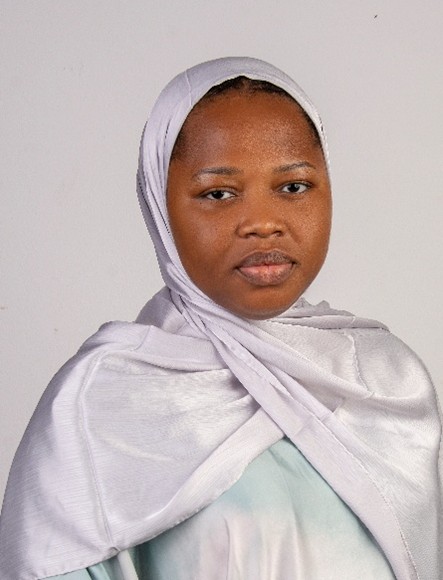
Emmanuel Bugyei Kwarteng is a Health Economist and PhD candidate at the School of Public Health, holding a Master’s Degree in Health Economics. He serves on the Analytical Team of the FairChoices Project, where he contributes to advanced data analysis, cost-effectiveness modelling, and evidence synthesis to inform priority-setting and resource-allocation decisions. His research specialization is in costing and economic evaluation, with a strong focus on assessing the economic burden of diseases and the cost-effectiveness of health interventions. He has contributed to multiple studies in Ghana, including research on health-related quality of life among HIV patients, analyses of non-communicable disease (NCD) treatment costs, community health worker interventions, and health financing reforms. His work aims to generate policy-relevant evidence to support efficient, equitable, and sustainable decision-making in health systems.
Mrs. Fridaus Abdul Samed
Analytical Team Member
View Profile
Fridaus Abdul Samed is a registered Physiotherapist with the Allied Health Professions Council (AHPC) – Ghana and holds an MPhil in Musculoskeletal Physiotherapy. She combines strong clinical expertise with research and analytical skills to advance evidence-informed practice and strengthen healthcare delivery. Her work is driven by a commitment to improving functional outcomes and quality of life across diverse populations. Her research interests span women’s health, maternal and child health, and adolescent health, where she contributes to generating context-specific evidence to improve service delivery and health outcomes. Fridaus also serves as a key member of the Analytical Team of the FairChoices Project, supporting advanced data analysis, cost-effectiveness modelling, and evidence synthesis to inform priority-setting and strategic resource allocation. Through her work on costing NCD interventions and health systems research, she contributes to producing policy-relevant evidence that promotes efficiency, equity, and sustainability in healthcare systems.
Phases of the Project (2026-2030)
- Mapping and validation of essential health services and interventions to support costing and the development of health benefit packages
- Cost the National Essential Health Services Package, especially PHC-level interventions, to support the new government’s Free PHC policy
- Build the capacity of the MOH, NHIA, GHS, and other relevant state agencies at the PhD and Master’s levels in priority setting and evidence-based decision-making
- Operationalise the National Values Framework (NVF) through structured operational tools Framework to support priority-setting mechanisms in the health sector
- Institutionalize the FairChoices model for costing and priority-setting across institutions and relevant state agencies, including the Ministry of Health, the National Health Insurance Authority, the Ghana Health Service, and the Ghana Medical Trust Fund
- Secure high-level agreement on new additions to Ghana’s NCD benefits, and align the NCD package with primary health care and the Essential Health Service Package for system-level implementation
- Develop and update evidence-informed treatment guidelines (STG) with levels of care and a Primary Health Care (PHC) focus
- Use the FairChoices model for Health Technology Assessments and ethical frameworks for costing, and for revising health benefit packages to support health decisions in Ghana
- Regularly conduct fiscal space analysis to support the health sector in resource prioritization and evidence-based decision-making
Related Outputs
đźš§ Under Development
This section is currently under development. Please check back later for updates.
Ghana NHIS Benefit Package Optimization: Regional Analysis
Analysis of Ghana’s National Health Insurance Scheme benefit package coverage and regional disparities across all 16 regions.
Download Report →Urban-Rural Health Access: Addressing Regional Inequities in Ghana
Policy brief examining equity considerations for NHIS benefit package design across Ghana’s urban-rural divide and regional variations.
Read Policy Brief →Cost-Effectiveness of Essential Health Interventions in Ghana’s NHIS Context
Peer-reviewed research analyzing cost-effectiveness of priority health interventions within Ghana’s National Health Insurance Scheme framework.
Access Paper →NHIS Priority Setting: Lessons from Multi-Stakeholder Dialogues
Presentation summarizing key insights from stakeholder consultations with Ministry of Health, NHIA, and healthcare providers on benefit package optimization.
View Presentation →